Do International Exams Really Help Your Canadian Study Permit?
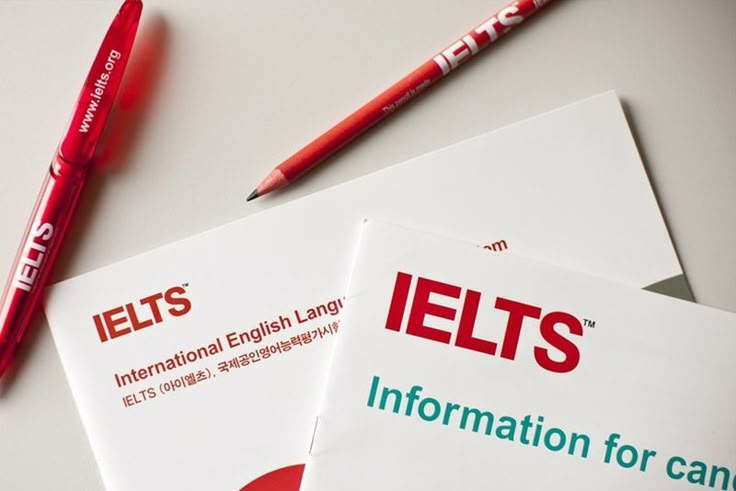
If you are planning to study in Canada, you may think a high IELTS score will boost your study permit, meanwhile many overlook the real Canada English Requirements for Study Permit.
It is a common belief among international applicants, but that is only partly true. Exams can strengthen your application, but they do their work at the admission stage and not at the immigration stage. Understanding that difference will save you money, time, and possibly a refusal. Knowing Canada English Requirements for Study Permit can help you plan ahead.
What you should know
No exam is a standard requirement for a Canadian study permit.
No exam earns you points with Immigration, Refugees and Citizenship Canada (IRCC).
What exams do is help you get an offer from a Designated Learning Institution (DLI).
Canada English Requirements for Study Permit are related to language benchmarks noted by IRCC.
That offer is a core document in your study permit application.
The right exam, with the right score, helps indirectly.
Think of it as a chain: exam result → admission offer → study permit application. The exam is the first link, not the last.
At a glance
Here is where each exam fits. “Useful later” refers to the language proof needed for the Post-Graduation Work Permit (PGWP).
| Exam | Main purpose | Required for the permit itself? | Useful later? |
|---|---|---|---|
| IELTS Academic, TOEFL iBT, PTE Academic, CAEL | Prove English for admission | No, though many schools require one | Academic versions may not count for the PGWP |
| IELTS General Training, CELPIP-General, PTE Core | Rarely needed for admission | No | Generally accepted for the PGWP (verify on IRCC’s list) |
| TEF Canada, TCF Canada | French for admission, or French-language study | No | Accepted for the PGWP |
| SAT or ACT | Undergraduate admission at some schools | No | No |
| GRE or GMAT | Graduate and business admission | No | No |
Exams that can support your admission
English-language tests
Most Canadian institutions want proof that you can study in English unless your previous education was completed in English. Commonly accepted tests include:
- IELTS Academic. Widely accepted across Canadian universities and colleges. Make sure you book Academic, not General Training, for admission.
- TOEFL iBT. Accepted by many institutions, with a strong focus on academic English.
- PTE Academic. Computer-based, with fast results, and accepted by a growing number of Canadian schools.
- CAEL. Designed for Canadian post-secondary study and accepted by many institutions, though acceptance is less universal than IELTS or TOEFL.
- Other tests. Some institutions also accept tests such as the Duolingo English Test. Acceptance varies widely, so never assume.
Each school sets its own minimum scores, and requirements often differ by program. A nursing program may ask for higher scores than a general arts degree.
French-language tests
For French-language programs, or study in Quebec, institutions may ask for TEF Canada, TCF Canada, or another recognized French assessment. Again, the institution decides what it accepts.
Admission tests
- SAT or ACT. Mostly relevant to undergraduate applications. Many Canadian universities do not require them, but some programs consider them, particularly for applicants from education systems the school is less familiar with.
- GRE. Required or accepted by some graduate programs, mainly in certain science, engineering, and social science fields.
- GMAT or GRE for business. Common for MBA and some other graduate business programs.
Only take one of these if your target program asks for it or clearly values it. A GRE score sent to a program that does not use it adds nothing.
Which exam fits your situation?
| Your situation | Likely route | What to do |
|---|---|---|
| Previous education taught in English | A test waiver may be possible | Ask admissions in writing whether proof of English-medium study is accepted |
| Non-English education, applying to a university | IELTS Academic, TOEFL iBT, or PTE Academic | Check accepted tests and per-skill minimums |
| Applying to a college programme | Varies by college and programme | Confirm accepted tests and scores for that exact programme |
| French-language programme or Quebec | TEF Canada or TCF Canada | Confirm the institution’s requirement and any Quebec-specific steps |
| Undergraduate degree at a school that lists SAT or ACT | SAT or ACT | Take it only if it is listed, since many schools do not ask |
| Master’s or PhD where the department lists the GRE | GRE | Many programmes do not require it, so check first |
| MBA or business master’s | GMAT or GRE | Check which versions the school accepts |
| Planning to work in Canada after graduating | A language test accepted for the PGWP | Plan it for later and confirm IRCC’s current list |
What IRCC actually looks at
When an officer reviews your study permit application, the questions are different from the ones an admissions committee asks. In general, they assess:
- A valid letter of acceptance from a DLI.
- A provincial or territorial attestation letter (PAL/TAL), unless you are exempt. Since 2024, most applicants have needed one because of the national cap on study permits. From 1 January 2026, master’s and PhD applicants at public institutions are exempt, but check your own situation because exemptions are specific.
- Proof of funds. For applications submitted on or after 1 September 2026, a single applicant outside Quebec must show access to at least CAD $23,448 for living expenses, on top of first-year tuition and travel costs. Quebec has its own, higher amount. IRCC updates these figures annually.
- Where your money comes from. Officers are now expected to look at the source of funds, so be ready to document it clearly: bank statements, proof of income, sponsor letters, and evidence of how savings were built.
- A genuine study plan. Your reasons for choosing this program, how it fits your background and career, and your ties to your home country all matter. This is often where applications are won or lost.
- Admissibility. Identity documents, a clean background, and any required medical or biometric steps.
Notice what is not on that list: a minimum IELTS band or a GMAT score. Financial documentation is the most common reason for refusals. The PIE News reported that an analysis of nearly 3,000 study permit decisions in June 2026 found 47% of refusals came down to missing financial documentation, a problem experts called preventable. That is why your funds deserve at least as much preparation as your exam. IRCC publishes the current amounts on its proof of financial support page, CIC News covers the September 2026 increase, and ECI’s guide to the IRCC proof of funds requirement walks through it in plain English.
Two applicants, one lesson
These are illustrative examples, not real cases, and no outcome is guaranteed.
Applicant A scores very high on IELTS and receives an offer. Her bank statement, though, shows a large deposit made shortly before applying, with no explanation of where it came from. The officer cannot confirm the funds are genuinely available to her, and the application is at risk despite the excellent score.
Applicant B meets the school’s minimum score with a small margin. His bank statements show savings built up over time, a sponsor letter explains the rest, and his study plan connects his work experience to the program and to a clear role back home. His file is easier to believe.
The score opened the door for both. The rest of the file decided how it went.
Where exams do help your permit application, indirectly
They make your admission possible. Without an offer, there is no application.
They support your credibility. A language score consistent with your chosen program, and a study plan that makes sense given your academic record, helps an officer see that you can succeed and that your plans are genuine.
They can open the door to stronger programs. Better scores give you more options, including programs with scholarships that reward test performance.
An exam that matters later: language for the post-graduation work permit
If you hope to work in Canada after graduation, language testing matters.
Canada English Requirements for Study Permit may apply to your situation.
The Post-Graduation Work Permit (PGWP) has language requirements.
They are around CLB 7 for university-level programs and CLB 5 for college-level programs.
For PGWP purposes, IRCC generally accepts specific tests, such as IELTS General Training, CELPIP-General, PTE Core, TEF Canada, and TCF Canada. The Academic versions you take for admission may not count, and the result must be less than two years old when you apply. Check IRCC’s PGWP eligibility page early, because you may need to sit a different test later. ApplyBoard’s guide to PGWP language requirements is a helpful plain-language explainer.
How to choose the right exam
- Start with your shortlist of schools. List the programs you want and read each one’s admission page.
- Note the accepted tests and the minimum scores, including any minimum per skill (reading, writing, listening, speaking), not only the overall score.
- Pick the test that suits your strengths. Some people do better with a computer-based format, others with in-person speaking.
- Aim above the minimum. A score that just meets the cut-off leaves no margin, and a stronger score can help in competitive programs.
- Check validity. Most major language tests are valid for two years, so time your exam so that the result is still valid when you apply for admission and for your permit.
- Send official score reports to every institution on your list, and keep your own copies.
Taking your exam and biometrics in Nigeria
If you are applying from Nigeria, plan a few local steps early.
- IELTS. The British Council runs IELTS in Nigeria, and you can book through its Nigeria site or check test dates, fees, and locations. IDP IELTS Nigeria is another route, with a test center in Lagos. Formats and center availability change, so confirm that the version you need (Academic or General Training, on computer or paper) is offered at your preferred center, and compare fees, which vary by center.
- Biometrics. If IRCC asks for your fingerprints and photo, you book an appointment at the Canada Visa Application Center run by VFS Global in Nigeria, where appointments are mandatory. VFS’s Canada center guide explains what to bring. VFS handles administrative steps only, and IRCC alone decides your application.
- Booking safely. Book through the official websites above, and be wary of anyone who promises guaranteed scores or guaranteed approval.
A realistic timeline
Exact timing depends on your intake and country, but a sensible plan looks like this:
- 9 to 12 months before your intake: shortlist schools and note accepted tests, minimum scores, and deadlines.
- 8 to 10 months before: prepare for and book your exam, leaving room for a retake.
- 6 to 8 months before: send official scores, submit admission applications, and start gathering financial documents.
- After your offer: get your attestation letter if you need one, and confirm any other steps your institution requires.
- 2 to 4 months before: submit your study permit application with complete documents, and check current processing times on IRCC’s website.
Common mistakes to avoid
- Treating an exam as a study permit requirement. It is an admission tool, unless your school or a specific program says otherwise.
- Taking several exams “to look stronger.” Extra tests do not compensate for weak finances or an unclear study plan.
- Booking before checking acceptance. Confirm the exact test and score with your institution first.
- Ignoring the money. Proof of funds problems are among the most common reasons for refusal.
- Sending a generic study plan. Officers read many applications. A specific, honest explanation of why this program, why Canada, and what you will do afterwards is far more persuasive.
- Relying on outdated advice. Programs that once streamlined applications for certain countries have ended, and rules have changed repeatedly since 2024. Always check the date on any guide, including this one.
Your pre-application checklist
- ☐ Accepted tests and minimum scores (overall and per skill) confirmed with each school
- ☐ Exam taken, with a result still valid when I apply
- ☐ Official score reports sent to every school on my list
- ☐ Letter of acceptance from a Designated Learning Institution
- ☐ Attestation letter obtained, or exemption confirmed
- ☐ Funds cover tuition, travel, and living costs (CAD $23,448 for a single applicant outside Quebec)
- ☐ Source of funds documented clearly
- ☐ Study plan written, specific, and consistent with my background
- ☐ Passport, photos, biometrics, and any required medical exam arranged
- ☐ Latest IRCC instructions checked before submitting
Need a second pair of eyes on your application?
If you would like help choosing a program, planning your exam, or organizing your documents, book a free consultation with Edge Concept International. Our advisors support students applying to Canada, the UK, and other destinations, from admission through visa preparation.
More Canada guides from ECI
- IRCC Proof of Funds Requirement for International Students: Here’s What You Need to Know: the 2026 funds rules explained
- How UCW & GUS Open Doors for International Students: studying in Canada through University Canada West
- No More UK MRes? Top Countries Offering Better Study Options: why Canada is a strong alternative for postgraduate study
- Why Edge Concept’s Student Visa Services Are World-Class: how ECI supports Canadian study permit applications
- How to Prepare for Your Study Abroad Journey: a step-by-step planning guide
Frequently asked questions
Do I need IELTS to get a Canadian study permit?
Not as an immigration requirement. You may need it, or an accepted alternative, for admission to your institution.
Can I apply without a language test?
Sometimes. Some institutions waive tests for applicants who studied in English, so ask your school directly and get the waiver in writing.
Are the GRE and GMAT necessary for a master’s?
Only if your program requires or values them. Many do not.
Does a higher score improve my chances of approval?
Indirectly. A strong score can support admission and demonstrate readiness, but IRCC does not award points for it.
Does an exam replace proof of funds?
No. Financial evidence is assessed separately and is essential.
How long are language test results valid?
Most major tests, including IELTS, TOEFL, and PTE, are valid for two years from the test date. Institutions and IRCC may apply their own rules, so check before you rely on an older result.
Should I retake an exam to raise my score?
Yes if you are below your school’s minimum, or in a competitive program where a higher score matters. If you already clear the requirement comfortably, your time is usually better spent on financial documents and your study plan.
Conclusion
Exams are tools, and like any tool they work best when you use them for the right job. Choose the test your institution actually asks for, prepare well, and aim for a score that gives you a margin. Then give just as much attention to the parts of your application IRCC scores directly: your finances, your documents, and your study plan.
A clear, honest, well-documented application beats a stack of unnecessary test results every time.
Your next step: pick your top three programs today, find each one’s accepted tests and minimum scores, and book your exam only after you have compared them. If you would like help with that shortlist, talk to Educational Consultants for free
Sources and useful links
| Type | Resource | Use it for |
|---|---|---|
| Official (Canada) | IRCC: proof of financial support | Current living-cost amounts and accepted documents |
| Official (Canada) | IRCC: PGWP eligibility | Language levels and test requirements for the post-graduation work permit |
| Official (Canada) | IRCC: about the PGWP | How a PGWP works and how long it lasts |
| International news | CIC News: Canada hikes funds needed by study permit applicants | Coverage of the 2026 funds increase |
| International news | The PIE News: Canada increases proof of funds requirement | The increase compared with other destinations, plus refusal analysis |
| International guide | ApplyBoard: PGWP language requirements explained | CLB 7 versus CLB 5 and approved tests |
| Local (Nigeria) | British Council Nigeria: book IELTS | Booking, locations, and fees |
| Local (Nigeria) | VFS Global: Canada Visa Application Centre, Nigeria | Biometrics appointments and what to bring |
| Local (Nigeria) | Free Consultation Services | For gaining clarity and making applications |

Disclaimer: This article is general information, not legal or immigration advice. Always confirm current requirements with IRCC and your chosen institution, or consult a regulated Canadian immigration consultant or lawyer.